
How TenXPR Made the
Fearless Fund a Household
Name
How to Write Effective TV Pitches
Mastering TV Pitch Success
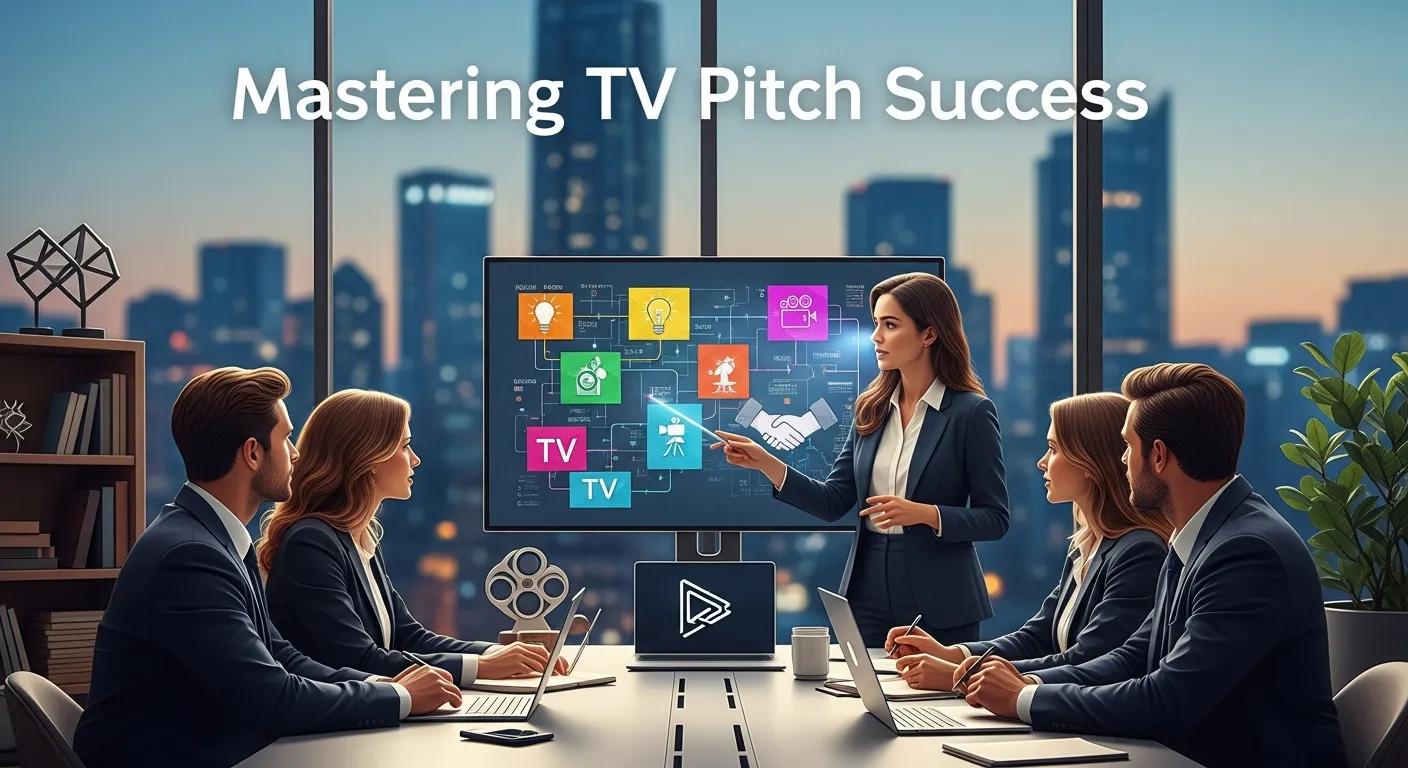
A TV pitch in the broadcast PR context is a concise, producer-facing proposal that presents a spokesperson, story, or demo as a timely on-air segment opportunity that earns television exposure and third-party credibility. This guide teaches marketing leaders and spokespeople how to craft media pitches that resonate with producers, demonstrate newsworthiness, and convert appearances into measurable business outcomes. Readers will learn why an effective TV pitch matters, the anatomy of a successful TV interview pitch, common pitfalls to avoid, how to measure broadcast PR impact, and how media training amplifies on-air performance. The article also explains targeted format choices—news, morning shows, panels, and streaming interviews—and offers templates, subject-line examples, visual asset checklists, and KPI tables you can use immediately. Throughout, semantic relations like spokespeople → demonstrate → credibility and visual assets → enhance → segment engagement are used to tighten messaging for producers and increase booking rates.
Why Is an Effective TV Pitch Crucial for Gaining TV Exposure?
An effective TV pitch is the bridge between an expert’s story and a producer’s segment need: it defines the angle, clarifies the on-air value, and supplies assets that reduce producer friction. Producers evaluate pitches by newsworthiness, visual potential, and spokesperson readiness; a well-constructed pitch speeds booking and increases the likelihood of prominent placement. Television exposure converts earned media into third-party validation, amplifies reach, and supports thought leadership by positioning spokespeople in trusted contexts. Understanding these mechanisms guides how you frame your pitch to match producer incentives while maximizing brand impact.
TV exposure delivers three primary benefits that matter to executives and communicators:
- Increased credibility through third-party validation that enhances trust with target audiences.
- Broader reach that puts a message in front of large, engaged broadcast audiences and amplifies online distribution.
- Accelerated thought leadership that helps secure speaking invitations, bylines, and follow-up coverage.
These benefits lead directly into choosing the right formats and tailoring your pitches to producer expectations, which is the next critical planning step.
How Does TV Exposure Boost Credibility and Brand Visibility?
TV exposure boosts credibility by creating a third-party endorsement: when a producer invites a spokesperson on-air, the show’s platform implicitly validates that person’s expertise. This mechanism increases audience trust because television functions as a gatekeeper that filters for relevance and authority. Post-appearance SEO and social amplification extend the segment’s life: clips, captions, and earned backlinks drive organic referral traffic and improve search visibility. Measurable outcomes include spikes in website visits, lead-form submissions, and increased social engagement following a broadcast slot, which together translate media mentions into business impact.
These effects make it important to select spokespeople and formats aligned with credibility goals; next we compare formats to help you target the right bookings.
What Types of TV Formats Should You Target for Your Pitch?
Different TV formats serve different strategic goals: breaking news segments prioritize timeliness and expert reaction, morning shows favor accessible demos and human-interest pieces, panel or talk formats reward strong opinions and debate skills, and streaming interviews allow deeper narratives and evergreen clips. Choosing the right format depends on your story’s rhythm, the spokesperson’s style, and the visuals you can deliver. Consider lead time and the show’s audience when selecting targets, and pitch with a suggested segment type to reduce producer workload.
Formats summary:
- News segments: ideal for rapid expert reaction and data-driven context.
- Morning shows: suited to demonstrations, lifestyle storytelling, and personality-driven moments.
- Panel/talk shows: best for opinion leaders who handle debate and rapid-fire questions.
- Streaming interviews: appropriate for long-form explanations and polished, shareable clips.
Selecting the correct format shapes the pitch angle and asset list you prepare; below we break down the concrete elements that make a pitch irresistible.
What Are the Key Elements of a Successful TV Interview Pitch?
A successful TV interview pitch contains concise components that together reduce producer effort and highlight on-air value: a sharp subject line, a personalized introduction, a timely news hook, a clearly qualified spokesperson, compelling visuals or B-roll, and a simple call to action. Each element serves a distinct function—get attention, prove relevance, show on-air readiness, and make booking the next logical step—and collectively they form a low-friction pitch package. The table below compares these elements with purpose and examples to turn abstract advice into ready-to-send templates.
| Pitch Component | Purpose | Example |
|---|---|---|
| Subject line | Capture producer attention and convey immediate newsworthiness | "Expert reaction: Surge in remote-worker injuries — available now" |
| Introduction | Personalize and show research into the producer's beat | "Saw your piece on workforce safety; quick expert angle that fits Tuesday’s desk segment" |
| Newsworthy hook | Tie your expertise to current events or unique data | "Exclusive survey: 72% of hybrid workers report ergonomic issues" |
| Spokesperson summary | Establish credibility and on-air fit | "CEO and ergonomics expert; past TV experience and clear demo" |
| Visual assets / B-roll | Make the segment visually compelling for viewers | "High-res product demo clips and customer footage ready" |
| Call to action | Provide clear next steps and availability | "Available live tomorrow 9–11am ET; can pre-record demo" |
How Do You Craft a Compelling Subject Line That Grabs Attention?
A subject line is a functional headline: it must state the news hook, imply scarcity or timeliness, and indicate a tangible on-air offer. Producers triage dozens of emails; a clear subject line reduces cognitive load and raises open rates. Use a newsworthy noun or data point, a concise descriptor of the offer, and when relevant, a timing cue. Avoid vague marketing language or sensationalism; clarity beats clickbait in inbox triage.
Subject-line examples you can adapt:
- "Reaction available: new EPA guidance — health expert on call"
- "Demo-ready: rapid hydration device for heat-wave coverage"
- "Exclusive data: consumer spending dip — economist available"
What Makes a TV Pitch Introduction Personalized and Relevant?
Personalized introductions show you’ve researched the show and respect producers’ time, which raises your credibility and response likelihood. Start with a concise reference to a recent story or the producer’s beat, then explain the specific value your spokesperson adds and end by stating the ease of booking. This tri-part structure demonstrates relevance, expertise, and low producer effort, making the decision to reply straightforward.
Two short intro examples:
- "I enjoyed your segment on small-business relief; our CFO can explain practical steps companies can take this week."
- "Following your piece on urban heat, our climate health researcher can bring live patient footage and data for a visual segment."
Personalized intros build topical alignment and reduce follow-up friction; the next step is creating a timely, newsworthy hook.
How Do You Develop a Newsworthy Hook and Timely Angle?
A newsworthy hook connects your expertise to current events, exclusive data, seasonal patterns, or a human-interest element that fits the show’s audience. Angle types include data-driven findings, expert reaction to breaking news, anniversary/tie-ins to notable dates, and human stories that create emotional resonance. Each angle should be framed with a one-sentence value statement that tells the producer why viewers will care now.
Angle examples by type:
- Data-driven: "New consumer survey shows X% change — economist can explain causes."
- Reaction: "Following today’s recall, our product-safety expert can comment live."
- Calendar tie-in: "As travel rebounds for holidays, practical packing demo for morning shows."
- Human interest: "Patient story + clinician perspective for a health segment."
Who Should Be the Spokesperson and How to Showcase Their Expertise?
The ideal spokesperson combines subject-matter authority, clear messaging, and presence on camera: credentials establish trust, concise talking points demonstrate readiness, and prior TV experience or media training reduces producer risk. In the pitch, include a two-line bio, three sentence-ready talking points, and a short note on on-air comfort (live vs. pre-record). Producers prioritize reliable, camera-ready sources who can articulate soundbites and bring visual elements.
Spokesperson checklist:
- Credibility: relevant titles, studies, or credentials.
- On-camera readiness: concise 15–30 second soundbites.
- Visual capability: props, demos, or B-roll to support the segment.
Make it simple for producers to see the spokesperson’s fit; deliverables and visuals further lower barriers.
What Visual Elements and B-Roll Enhance Your TV Pitch?
Visual assets transform an interview from talk to television: high-quality B-roll, step-by-step demos, charts, and customer footage increase a segment’s viewer value and make producer booking decisions easier. Provide file formats, durations, and suggested edit points in the pitch so producers can assess integration quickly. Offer both raw and edited clips and describe the visual beat each asset supports to highlight direct editorial fit.
Visual asset checklist:
- Offer 30–60 second B-roll clips showing the product or demonstration.
- Provide high-resolution stills and short cutaways for lower-third use.
- Note technical specs and delivery options to simplify producer logistics.
Supplying clear, usable visuals makes your pitch practically plug-and-play, increasing the chance of placement. To finish a pitch, include an explicit call to action.
How Do You Include a Clear Call to Action in Your Pitch?
A call to action converts interest into booking by stating specific availability, the format you propose, and the next step for producers. Include preferred time windows, whether the appearance can be live or pre-recorded, and any logistical needs (e.g., in-studio demo space or remote setup). Clarity reduces back-and-forth and signals professionalism, which producers appreciate.
CTA templates:
- "Available live Tuesday 8–10am ET; can pre-record a five-minute demo."
- "Can join via remote feed, local studio available, flexible on timing this week."
- "Offer an exclusive 10-minute sit-down for Wednesday morning; availability: 9–11am ET."
A precise CTA shortens booking timelines and increases response rates; next we examine how a structured process operationalizes these tactics for clients.
How Does TenXPR’s 5-Step Process Help You Secure TV Appearances?
TenXPR specializes in earned television placements for high-profile clients through a structured five-step process that translates story strategy into booked segments and on-air readiness. This operational approach reduces producer friction, elevates spokesperson performance, and targets shows where the story fits editorially. The five steps are presented here verbatim to explain how the methodology converts strategy into measurable placements: Discover Your Vision; Share Your Stuff; We Pitch You; Be Prepared & Ready to Go; Media Training. The sequence begins with clarifying goals and ends with preparation that reduces live-interview risk, creating a complete campaign lifecycle.
Discover Your Vision and Share Your Stuff establish foundational materials and strategy by aligning goals with target shows and assembling bios, data, and visuals that power tailored outreach. The process maps audience intent to producer needs, enabling highly targeted pitch lists and customized angles. We Pitch You applies a professionalized outreach cadence, positioning spokespeople with concise subject lines, personalized intros, and follow-up sequences that respect producer workflows while maximizing visibility.
Be Prepared & Ready to Go focuses on technical readiness and scheduling, ensuring availability windows, remote feed checks, and demo run-throughs are in place to prevent last-minute issues. Media Training, the final step, refines messaging, on-camera technique, and crisis handling so spokespeople deliver clear, confident segments. Together, these steps operationalize pitching best practices into an execution plan designed to convert pitched opportunities into actual TV bookings. If you want to explore how a process-driven approach can increase your earned television exposure, consider booking a consultation to align strategy with opportunity.
What Happens in the “Discover Your Vision” and “Share Your Stuff” Steps?
Discover Your Vision clarifies business objectives, target audiences, and the executive’s primary messages so every pitch maps to measurable outcomes, while Share Your Stuff collects bios, data, media kits, and visual assets that producers need. These stages produce a pitch-ready dossier: short bios, one-page talking points, video clips, and a prioritized show target list. Deliverables reduce producer friction by supplying everything a producer needs to evaluate and book a segment quickly.
This asset-first approach supports tailored outreach and makes the subsequent pitching cadence more effective, which transitions naturally into how TenXPR conducts outreach.
How Does “We Pitch You” and “Be Prepared & Ready to Go” Work?
We Pitch You applies targeted outreach to producers with personalized subject lines, concise intros, and asset links while managing follow-up cadence and exclusivity offers to maximize response. Be Prepared & Ready to Go coordinates availability windows, performs technical checks for remote appearances, and prepares wardrobe and staging guidance so live or pre-recorded segments run smoothly. The combination of professional outreach and operational readiness reduces no-shows and last-minute cancellations.
This execution model is designed to align editorial opportunity with client readiness, and it relies on effective on-air preparation described next.
Why Is Media Training Essential Before Your TV Appearance?
Media training reduces risk and magnifies impact by teaching message discipline, interview control, and on-camera technique that translate to clearer, more persuasive television moments. Training modules typically include message development, bridging tactics, mock interviews, and technical coaching for remote setups. Outcomes include improved soundbites, fewer off-message statements, and higher confidence under pressure, which all increase the chances of repeat bookings and stronger post-air engagement.
These preparation benefits link directly to broader media training strategies that can be deployed to institutionalize on-air readiness across spokespeople.
What Common Mistakes Should You Avoid When Writing TV Pitches?
Common errors in TV pitching include sending generic, untargeted emails; mistiming outreach relative to news cycles; and presenting stories without clear visual or news value. These mistakes make it hard for producers to justify booking an interview and often lead to ignored emails or terse rejections. Avoiding predictable errors increases open and response rates by showing producers you understand editorial constraints and viewer needs. Clarity, relevance, and producer empathy are the corrective pillars that make pitches more effective.
Below are common mistakes and how to correct them in practice:
- Generic pitches: personalize with recent producer work and a concise reason your story fits.
- Poor timing: respect lead times and pitch tie-ins that align with editorial calendars.
- Lacking visuals: include B-roll, demos, or graphics to make the segment producible.
Addressing these areas improves the editorial fit and increases your odds of meaningful placements.
How Does Lack of Research and Generic Pitches Harm Your Chances?
Producers receive many mass emails; without clear personalization, your pitch becomes noise that’s filtered out. Lack of research signals disrespect for the producer’s beat and increases the chance your email will be ignored or archived. Providing a one-line show reference, a tailored hook, and a short explanation of the segment’s visual or audience fit demonstrates effort and increases reply probability.
Personalization is often the difference between an ignored pitch and a booked segment, which is why timing and calendar awareness also matter.
Why Is Timing Critical in Broadcast Media Pitching?
Timing in broadcast pitching balances lead times for scheduled segments with the rapid tempo of breaking news; morning shows often require 1–2 days’ lead time for demos, while expert reaction to breaking news demands immediate availability. Understanding these rhythms helps you propose realistic booking windows and avoid pitching evergreen segments during fast-moving news cycles. Aligning pitch timing with editorial calendars—holidays, industry events, or regulatory deadlines—amplifies relevance and reduces friction.
Strategic timing turns a good pitch into a timely opportunity; when stories lack newsworthiness, reframing becomes the next step.
What Happens When Your Story Lacks Clear Newsworthiness?
When a story lacks a clear hook, producers will deprioritize it in favor of timely material, resulting in few or no bookings. To salvage a weak angle, reframe using proprietary data, tie-ins to current events, or human elements that create viewer interest. Techniques include adding fresh statistics, creating a visually compelling demo, or proposing an exclusive reveal to create urgency and editorial value.
Reframing based on data and visuals improves editorial fit and increases the chance of placement, which leads naturally into how you measure success when placements occur.
How Can You Measure the Success of Your Broadcast PR Campaigns?
Measuring broadcast PR requires a defined KPI framework that links on-air placements to reach, engagement, and business outcomes. Core KPIs include placements, audience reach (estimated viewers), share-of-voice and sentiment, and conversions like traffic spikes or leads attributable to the appearance. Combining media monitoring with analytics and social listening tools shows both raw exposure and downstream behavior, enabling you to iterate on pitch strategy and spokesperson selection.
The table below maps common broadcast PR KPIs to monitoring tools and what each metric reveals for decision-making.
| KPI | Tool | What it measures |
|---|---|---|
| Placements | Media monitoring services | Count and context of earned TV segments |
| Estimated reach | Broadcast audience measurement | Number of viewers and demographic mix |
| Referral traffic | Web analytics | Website visits and landing-page behavior after air |
| Conversions | CRM / analytics attribution | Leads, sign-ups, or sales linked to broadcast timing |
| Social engagement | Social listening platforms | Shares, comments, and sentiment around clips |
What Key Performance Indicators Track TV Exposure and Media Impact?
Placements are the foundational KPI: they quantify the number of segments secured and provide context for prominence (e.g., segment length, placement in show). Reach and impressions estimate audience size and demographic fit, which inform whether the booking met target-audience goals. Conversion metrics—spikes in traffic, form completions, or direct inquiries—measure business impact and should be compared to baseline behavior to estimate lift. Sentiment and share-of-voice contextualize how coverage landed relative to competitors and the broader narrative.
Together these KPIs enable a closed-loop approach where placements inform creative changes in pitching and spokesperson preparation.
Which Tools Help Monitor Your Broadcast PR Results?
A combination of media monitoring, web analytics, and social listening tools offers a comprehensive view of broadcast PR outcomes. Media monitoring services capture the placement and runtime, analytics platforms trace referral behavior and conversions, and social listening tools measure post-air engagement and sentiment. Using these tool categories together creates a multi-dimensional measurement system that links earned exposure to tangible business signals.
Tool categories and use cases:
- Media monitoring: capture and archive TV segments for review and reporting.
- Analytics platforms: assess referral traffic and conversion lift after airings.
- Social listening: monitor clip distribution, sentiment, and audience reaction.
| KPI | Tool | What it measures |
|---|---|---|
| Placements | Broadcast clipping services | Segment occurrences and timestamps |
| Reach | Audience measurement providers | Estimated audience size and demographics |
| Conversions | Web analytics / CRM | Visitor behavior and lead attribution |
| Sentiment | Social listening tools | Tone and engagement around clips |
How Can Media Training Enhance Your TV Interview Performance?
Media training prepares spokespeople to convert on-air minutes into lasting impact by developing message clarity, interview control, and camera presence. Training works by translating strategic messages into concise soundbites, rehearsing likely questions and hostile scenarios, and refining nonverbal delivery for broadcast cameras. The result is a spokesperson who communicates key points under pressure, uses bridging techniques to stay on message, and delivers visuals that support storytelling. Investing in training reduces the risk of misstatements and strengthens the return on earned appearances through higher-quality segments.
Training modules are modular and customizable to spokesperson needs, making them applicable to executives, subject-matter experts, and public figures preparing for high-visibility opportunities.
What Are the Essentials of Media Training for TV Guests?
Core media training modules include message development, bridging and control techniques, on-camera delivery (voice, posture, and eye-line), and mock interviews with critique. Message development clarifies the top three points you want to land; bridging teaches how to steer difficult questions back to those points; on-camera coaching polishes nonverbal cues that affect credibility. Mock interviews simulate real conditions and accelerate skill acquisition by providing corrective feedback in a safe environment.
These essentials produce measurable improvements in clarity and camera comfort that translate into stronger segments and repeat bookings.
How Does Media Training Build Confidence and Manage Crisis Communication?
Media training builds confidence by rehearsing stressful scenarios and teaching frameworks for crisis response that prioritize safety, transparency, and message discipline. Techniques like bridging, deflection, and short, repeatable lines help spokespeople maintain control and reduce the chance of damaging soundbites. A crisis checklist—key messages, designated spokesperson, escalation flow, and holding statements—reduces reaction time and maintains narrative control during fast-moving events.
Prepared spokespeople convey steadiness and competence on air, which protects reputation and preserves the opportunity to tell your side of the story.
TenXPR offers tailored media training as part of its service suite to help clients internalize these skills and perform reliably on national and local broadcast platforms.
For teams ready to elevate earned broadcast presence, consider scheduling a consultation with TenXPR to align your story, assets, and spokesperson readiness with a process designed to secure high-value TV placements. TenXPR’s expertise in earned media for television—paired with a structured five-step process and specialized media training—helps high-profile clients turn appearances into measurable credibility and business outcomes. Reach out to start mapping a TV strategy that matches your goals and editorial opportunities.

At TENXPR, our mission is to
execute all of our available
resources, knowledge, expertise,
and team collaboration to create
a powerful story and visibility for
your brand.
Links


